What do know about freckles?
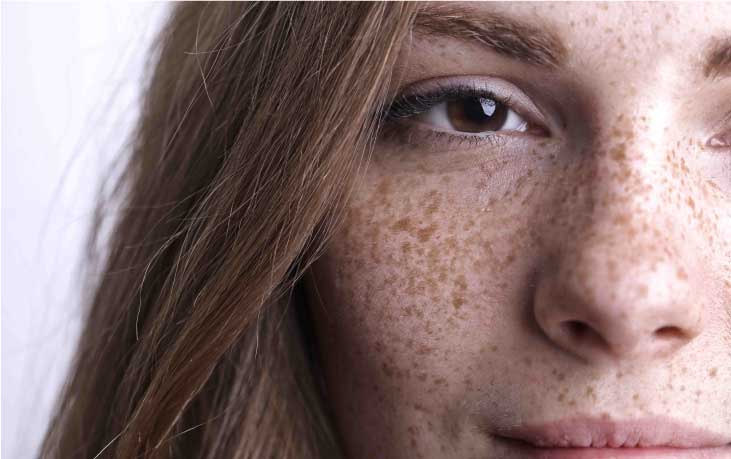
Freckles are light brown spots that occur on the skin mainly due to sun exposure. Freckles are tiny, non-cancerous markings on the skin.
Freckles are, for the most part, not harmful. They develop due to excess production of melanin, the pigmentation which gives color to skin and hair.
Ephelides and solar lentiginous are the two types of freckles. Ephelides are the type of freckles that most people are familiar with. Adults acquire solar lentiginous, which are dark areas of skin. Freckles, age spots, and sunspots are examples of this. The appearance of the two types of freckles may be similar, but they differ in important ways, such as developing.
Causes of Freckles
Freckles occur, When melanin, the pigment that gives skin its color, accumulates up beneath the surface, appears as freckles form. Freckles can be brown, red, or tan.
Some people are more likely to have freckles as a result of sun exposure and hereditary factors:
Exposure to the sun
The extra melanin is produced by a person’s skin cells is to protect the skin from sun damage. That is why freckles emerge after exposure to the sun.
Freckles can cover a large area of skin and return or darken in the summertime. In the winter, when new skin cells replace old ones, freckles often fade or disappear.
Freckles mainly occur on:
- face
- arms
- neck
- back
- chest
Genetics/Hereditary Factors
Genetics also have a significant factor in who is more likely to get freckles due to the type of melanin produced by their bodies.
Pheomelanin and eumelanin are two forms of melanin that the body can manufacture. Pheomelanin has no role in protecting the skin from UV radiation, whereas eumelanin does.
A gene called MC1R controls the type of melanin produced by the organism.
People with dark hair, eyes, and skin produce most eumelanin and are less prone to have spots.
Difference between Sunspots, moles, and freckles?
Freckles and moles are not the same things. Freckles and age spots are both caused by sun exposure. Age spots are larger and more clearly defined than freckles, and they are more common in older people.
Moles, like ephelides, are more common in light-skinned persons. . It usually appears at or shortly after delivery.
Is it necessary to consult a doctor for moles and freckles?
Freckles and moles do not constitute a threat. However, moles can indicate a higher risk of melanoma, or malignant skin cancer.
Examine your freckles and moles for the following things:
A- Asymmetrical: Draw a line through the center to create asymmetrical. It’s asymmetrical if the halves don’t match.
B – Border: Borders of Cancerous mole are often irregular, notched, or rough.
C – Color: A mole with a wide range of hues is a red flag.
E – Evolving: Tell your doctor if your size, shape, color, or elevation changes.
If your freckles, moles, or sunspots meet one or more of the above criteria, make an appointment with your doctor or a dermatologist.
Freckle prevention
By shielding their skin from the sun, people can prevent or lessen the occurrence of freckles.
Protecting the skin from the sun will not lessen the look of existing freckles, but it will help prevent new freckles.
To protect your skin from the sun, the American Academy of Dermatology (AAD) recommends the following steps:
- wearing a water-resistant sunscreen that protects against UVA and UVB rays and has an SPF of 30 or higher
- Long-sleeved shirts, a hat, and sunglasses are all recommended.
- When the sun is at its hottest, between 10 a.m. and 2 p.m., stay in the shade.
- When outside or after swimming or sweating, reapply sunscreen every 2 hours.
- tanning beds should be avoided






![Effective Benefits Of Besan[Gram] Powder For Skin: Natural Face Pack For All Skin Type](https://medicalfitbit.com/wp-content/uploads/2021/12/besannnn-120x86.jpg)