
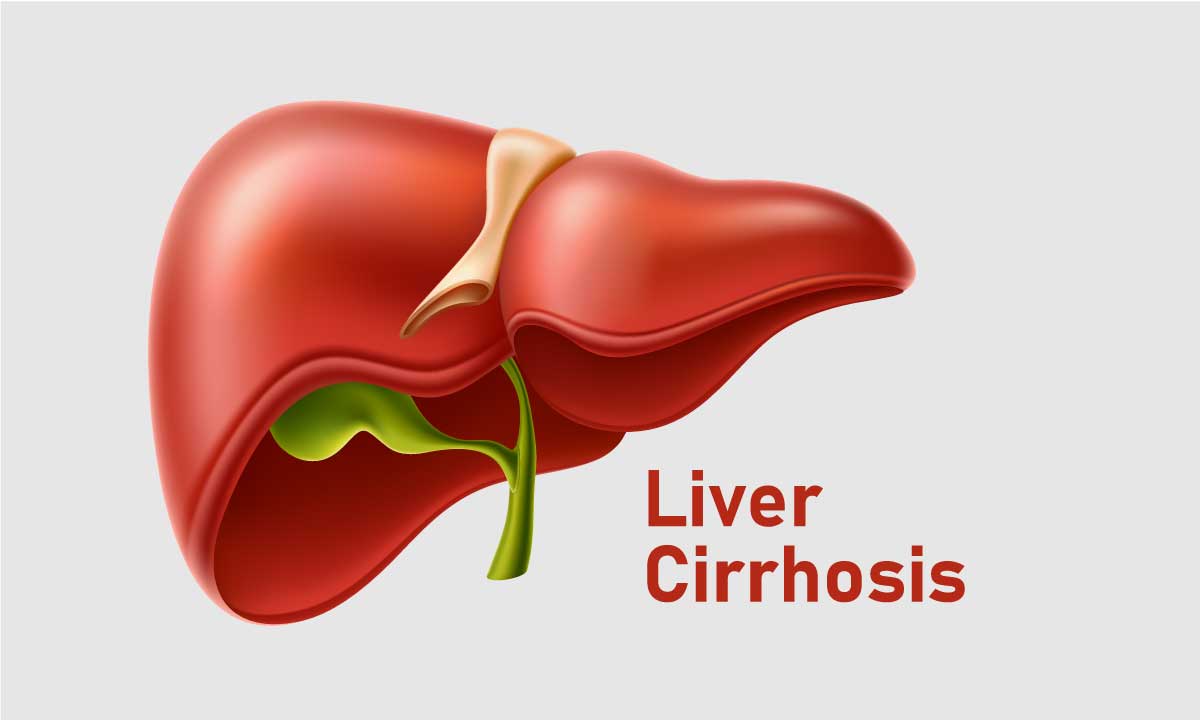
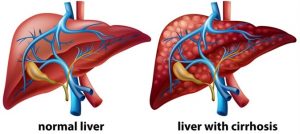
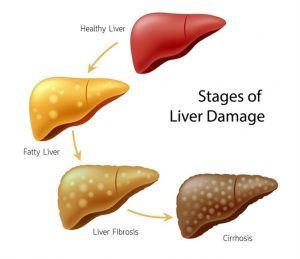
Cirrhosis of the liver is a disorder in which scar tissue replaces with healthy liver cells.
Causes Of Cirrhosis
The following are some of the reasons:
- Abuse of alcohol for a long time
- Hepatitis
- Nonalcoholic fatty liver disease
- Hemochromatosis
- Cystic fibrosis
- Wilson’s illness{ is a condition in which copper accumulates in the liver}
- Biliary atresia
- Galactosemia or glycogen storage disease
- A digestive disorder caused by a genetic mutation (Alagille syndrome)
- The immune system of your body causes liver disease (autoimmune hepatitis)
- Primary biliary cirrhosis
- Bile duct scarring and hardening (primary sclerosing cholangitis)
- Infections like syphilis and brucellosis
Symptoms Of Cirrhosis
Symptoms are:
- Fatigue
- Bruising or bleeding easily
- Loss of appetite
- Nausea
- Legs, feet, or ankles that swell (edema)
- Loss of weight
- Skin itchiness
- Skin and eye discoloration are yellow (jaundice)
- Ascites
- Your skin has spider-like blood vessels.
- Redness on palms of the hands
- Absent or missed periods
- Loss of sex drive, breast enlargement (gynecomastia), or testicular atrophy are all symptoms that men experience.
- Drowsiness, confusion, and slurred speech (hepatic encephalopathy)
Diagnosis Of Cirrhosis
Anyone experiencing the following symptoms should consult their doctor right away:
- Shivering and fever
- Breathing problems
- bloody vomit
- feces that are black or tarry
- periods of lethargy or perplexity
Tests are:
- Blood tests are used to determine how well the liver is working. Hepatitis may be present if alanine transaminase (ALT) and aspartate transaminase (AST) levels are elevated.
- Ultrasound, CT, or MRI scans
- Liver Biopsy
- Endoscopy: A long, thin tube with a light and video camera is inserted into the esophagus and into the stomach by the doctor—the doctor checks for varices, which are enlarged blood veins that can indicate cirrhosis.
Stages Of Cirrhosis
Cirrhosis is evaluated on a scale known as the Childs-Pugh score, which is as follows:
A: Mild
B :Moderate
C: severe
Cirrhosis is also classified as compensated or decompensated by doctors. Decompensated cirrhosis prevents the liver from performing its duties properly, resulting in severe symptoms.
Treatment Of Cirrhosis
Treatment for alcoholism: In many circumstances, the doctor will recommend an alcohol addiction treatment program.
Medications: The patient may be administered medications to treat hepatitis B or C-related liver cell destruction.
Controlling portal vein pressure: Blood can “back up” in the portal vein, which delivers blood to the liver, resulting in high portal vein blood pressure.
The patient most likely has esophageal varices if they vomit blood or pass bloody stools. It is necessary to get medical help right away. The procedures listed below may be of assistance:
- Control bleeding
- Sclerotherapy by injection: Following an endoscopy, a material is injected into the varices, causing a blood clot and scar tissue to develop—this aids in the halting of the bleeding.
- A Seng taken-Blakemore tube: The tube’s end is capped with a balloon. If endoscopy fails to halt the bleeding, the tube is inserted into the patient’s stomach. The balloon has been filled with air. This applies pressure to the varices, halting bleeding.
- TIPSS (transjugular intrahepatic portosystemic stent shunt): If the above treatments fail to stop the bleeding, a metal tube is introduced through the liver to connect the portal and hepatic veins, forming a new blood flow path. This relieves the pressure that was producing the varices in the first place.
Other problems are:
Infections: Antibiotics will be administered to the patient if an infection develops.
- Cirrhosis patients are at a substantially higher risk of developing liver cancer, so they should be screened for it. Regular blood tests and imaging scans may be recommended by the doctor.
- Hepatic encephalopathy, often known as elevated blood toxin levels, can be treated with drugs.
Complications Of Cirrhosis
Cirrhosis complications can include:
- Portal hypertension
- Legs and abdomen are swollen{ascites}
- Splenic enlargement is a condition in which the spleen grows larger (splenomegaly). Swelling and alterations to the spleen, as well as the entrapment of white blood cells and platelets, are all possible side effects of portal hypertension.
- Bleeding
- Portal hypertension can lead to life-threatening bleeding by enlarging veins (varices) in the esophagus (esophagal varices) or the stomach (gastric varices).
- Infections: Cirrhosis can make it tough for your body to fight infections. Bacterial peritonitis, a dangerous infection, can be caused by ascites.
- Malnutrition: Cirrhosis can make it harder for your body to assimilate nutrition, resulting in weakness and weight loss.
- Toxin build-up in the brain (hepatic encephalopathy). Cirrhosis damages the liver, which makes it unable to remove toxins from the blood as effectively as a healthy liver. Toxins can build up in the brain, causing mental disorientation and concentration problems. Hepatic encephalopathy can lead to unresponsiveness or coma over time.
- Jaundice: When your sick liver doesn’t remove enough bilirubin, a blood waste product, from your blood, you get jaundice. Jaundice causes the skin and eyes.
- Bone disease is a serious condition. Cirrhosis causes some patients to lose bone strength, putting them at risk for fractures.
- Increased chances of developing liver cancer. Cirrhosis is present in a substantial percentage of persons who develop liver cancer.
- Cirrhosis is both acute and persistent. Multiorgan failure can occur in some people. Researchers now believe that this is a separate issue that affects certain people with cirrhosis, but they don’t know why.
Prevention Of Cirrhosis
Take these precautions to protect your liver and lower your chance of cirrhosis:
- If you have cirrhosis, you should avoid drinking alcohol.
- Maintain a balanced diet: Opt for a plant-based diet rich in fruits and vegetables. Choose whole carbohydrates and lean protein sources. Reduce your intake of greasy and fried foods.
- Maintain a healthy body mass index (BMI)
- Reduce your hepatitis risk: Inquire about hepatitis immunizations with your doctor.



Comments 2