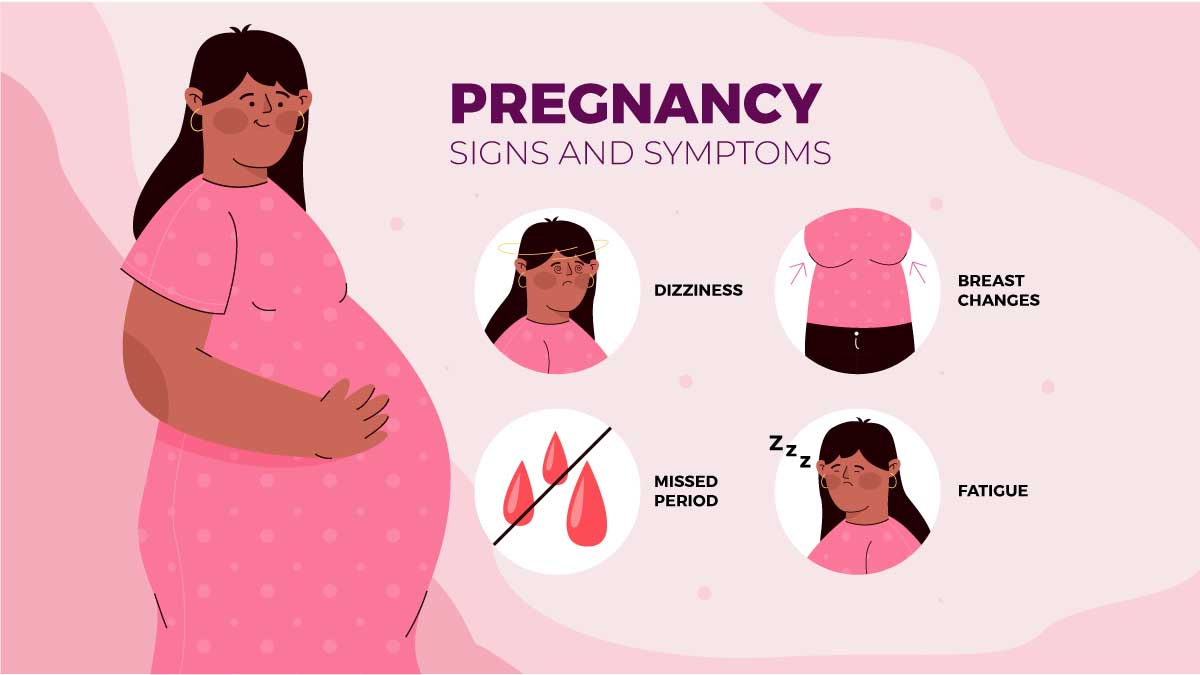
Missed periods, breast changes, frequent urination, nausea, and vomiting are all early pregnancy symptoms. However, these symptoms could be caused by other conditions also and don’t always show you’re pregnant, so if you’re worried, take a home pregnancy test and contact your doctor.
Backache, headache, leg cramps, itch or tingling, constipation, hemorrhoids or indigestion, vaginitis, mood changes, or depression are just a few of the changes that might occur in the later stages of pregnancy.
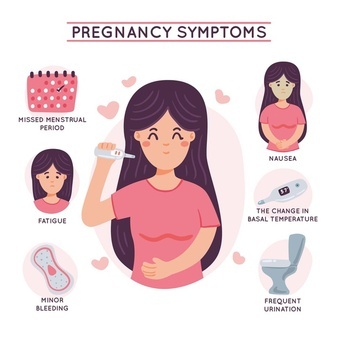 Missed Period/Menses
If you’re in your childbearing age and your monthly cycle hasn’t started after a week or more, you could be pregnant. However, if you have irregular menses, this symptom can be deceiving.
Vomiting and nausea
Morning sickness is the most common ailment that affects about half of all pregnant women. Nausea, vomiting, loss of appetite are some of the symptoms.
Morning sickness normally starts around week four to six of pregnancy and subsides by week twelve, though it might last longer or return around week 32.
Food cravings
Cravings for certain meals, particularly foods that offer energy and calcium, such as milk and other dairy items, are highly prevalent during pregnancy. You can also find an unexpected dislike for things you used to enjoy.
Non-food objects such as soil or paper can even develop an odd flavor for certain ladies. This is known as ‘pica,’ and it could be a sign of vitamin inadequacy. If this continues, please contact your doctor or midwife.
Tender and swollen breasts
Hormonal change occurs in early pregnancy that might make your breasts uncomfortable and aching.
Increased Urination
You might notice that you’re urinating more frequently than normal. During pregnancy, the volume of blood in your body rises, leading your kidneys to process excess fluid that collects in your bladder.
Cramping and spotting
The fertilized ovum attaches itself to the wall of the uterus after conception. This can result in spotting and, in some cases, cramping, which are early indicators of pregnancy.
This is referred to as implantation hemorrhage. It happens 6-12 days after the egg is fertilized.
Because the cramps and bleeding mirror menstrual cramps, some women mistake them for the onset of their period. The bleeding and cramping, on the other hand, are minor.
A lady may detect a white, milky discharge from her vaginal area in addition to bleeding. This is due to the thickening of the vaginal walls, which occurs shortly after pregnancy. The discharge is caused by the increased development of cells lining the vaginal canal.
Other symptoms of pregnancy
During the Ist trimester, you may also notice the following less noticeable signs and symptoms of pregnancy:
Moodiness
In early pregnancy, the surge of hormones in your body can make you feel especially emotional and teary. Swings in mood are also typical.
Bloating
Early in pregnancy, hormonal shifts might make you feel bloated, similar to how you might feel at the start of your menstrual period.
Light Spotting
One of the first indicators of pregnancy can be a little bit of light spotting. When the fertilized egg attaches to the uterine lining about 10 to 14 days after conception, implantation hemorrhage occurs. Implantation bleeding usually happens around the same time as a menstrual cycle. It is not, however, present in all women.
Cramping
Early in pregnancy, some women suffer minor uterine cramps.
Constipation
Hormonal changes slow down your digestive system, which can cause constipation.
Aversions to certain foods
You may become more sensitive to some odors, and your sense of taste may change while pregnant. These food choices, like most other pregnant symptoms, can be attributed to hormonal changes.
Congestion in the nose
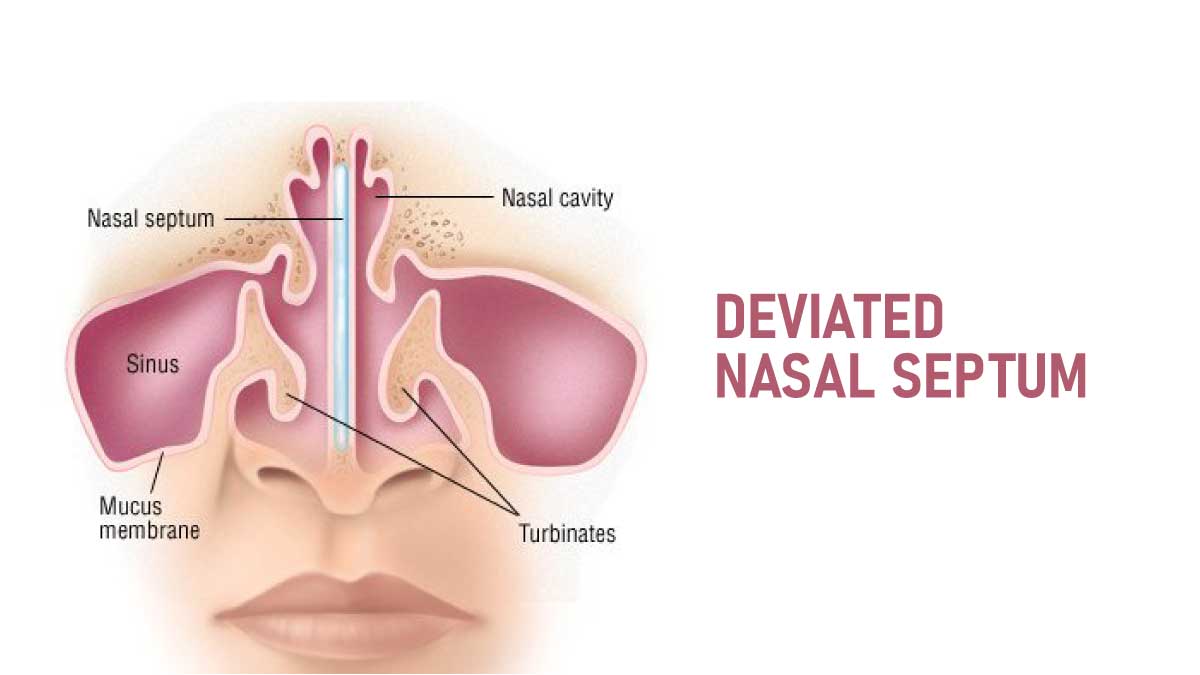
The mucous membranes in your nose can expand, dry up, and bleed readily as hormone levels and blood production rise.




![Effective Benefits Of Besan[Gram] Powder For Skin: Natural Face Pack For All Skin Type](https://medicalfitbit.com/wp-content/uploads/2021/12/besannnn-120x86.jpg)
![Breast Cancer and symptoms: [Anatomical Features]](https://medicalfitbit.com/wp-content/uploads/2021/10/Breast-Cancer.jpg)