
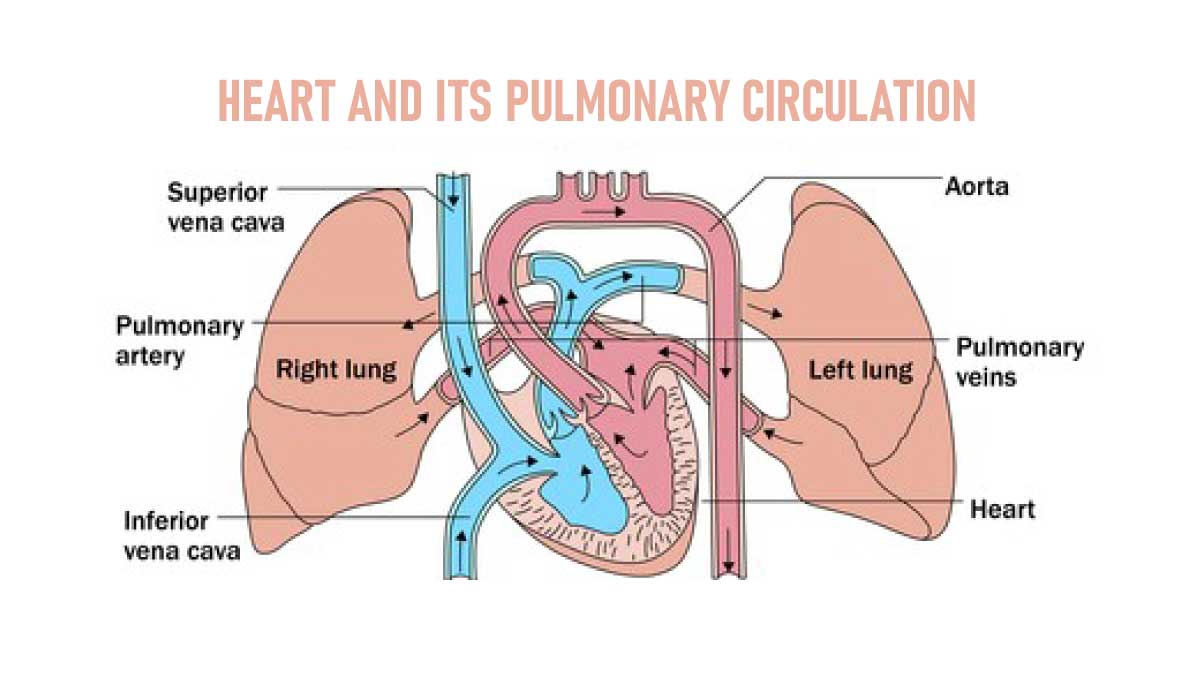
What should you know about pulmonary circulation?
Pulmonary circulation is made up of a complex system of arteries, veins, and lymphatics that transport blood, tissue fluids between the heart, lungs, and back. They’re made to do things like ventilation and gas exchange, which are only possible in the pulmonary circulation.
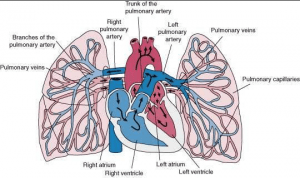
Pulmonary Circulation
The deoxygenated blood from the right atrium passes through the right atrioventricular opening, guarded by the tricuspid valve, then into the right ventricle; this blood is pumped by the right ventricle into the pulmonary trunk and its branches. Exchange of both oxygen and CO2 takes place between the blood in the lung capillaries and the air in the alveoli[across alveolar-capillary membrane]. The lung capillaries, carrying oxygenated blood, join to form venules-two from each lung-enter the left atrium of the heart, thence, the left ventricle-[please note that the pulmonary arteries carry deoxygenated blood and pulmonary veins, oxygenated blood].
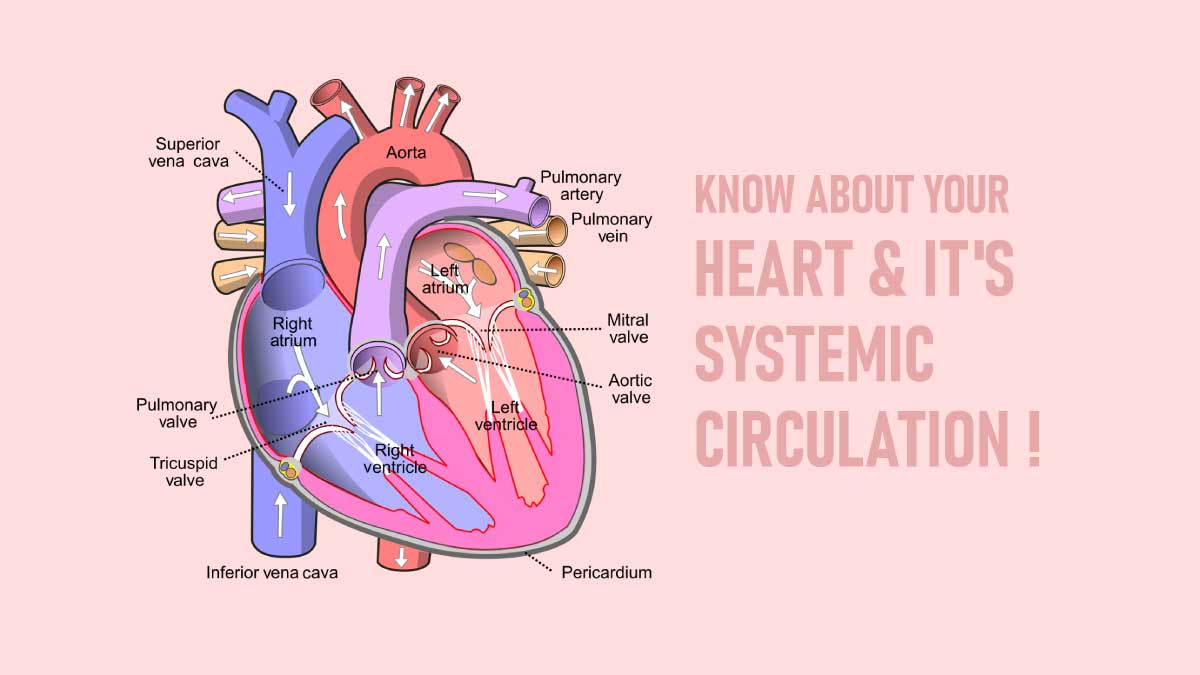
The heart is divided, physiologically, into right and left parts, which are called clinically “the right heart” and “left heart”. Each consists of 2 chambers-an upper receiving chambers, the atrium, and a lower pumping chamber, the ventricle.
The “right heart” receives deoxygenated blood and pumps it into the pulmonary circulation. The “left heart,” on the other hand, receives oxygenated blood and pumps it into the systemic circulation.
Since the pressure in the systemic circulation[80-120mm of Hg]is greater than the pressure in the pulmonary circulation[20-40 mm of Hg], the left ventricle is thicker and more powerful than the right ventricle.
![Breast Cancer and symptoms: [Anatomical Features]](https://medicalfitbit.com/wp-content/uploads/2021/10/Breast-Cancer.jpg)
![Varicose[Spyder]Veins: Things You Need To Know!](https://medicalfitbit.com/wp-content/uploads/2021/10/VaricoseSpyderVeins.jpg)

A very informative and useful blog