
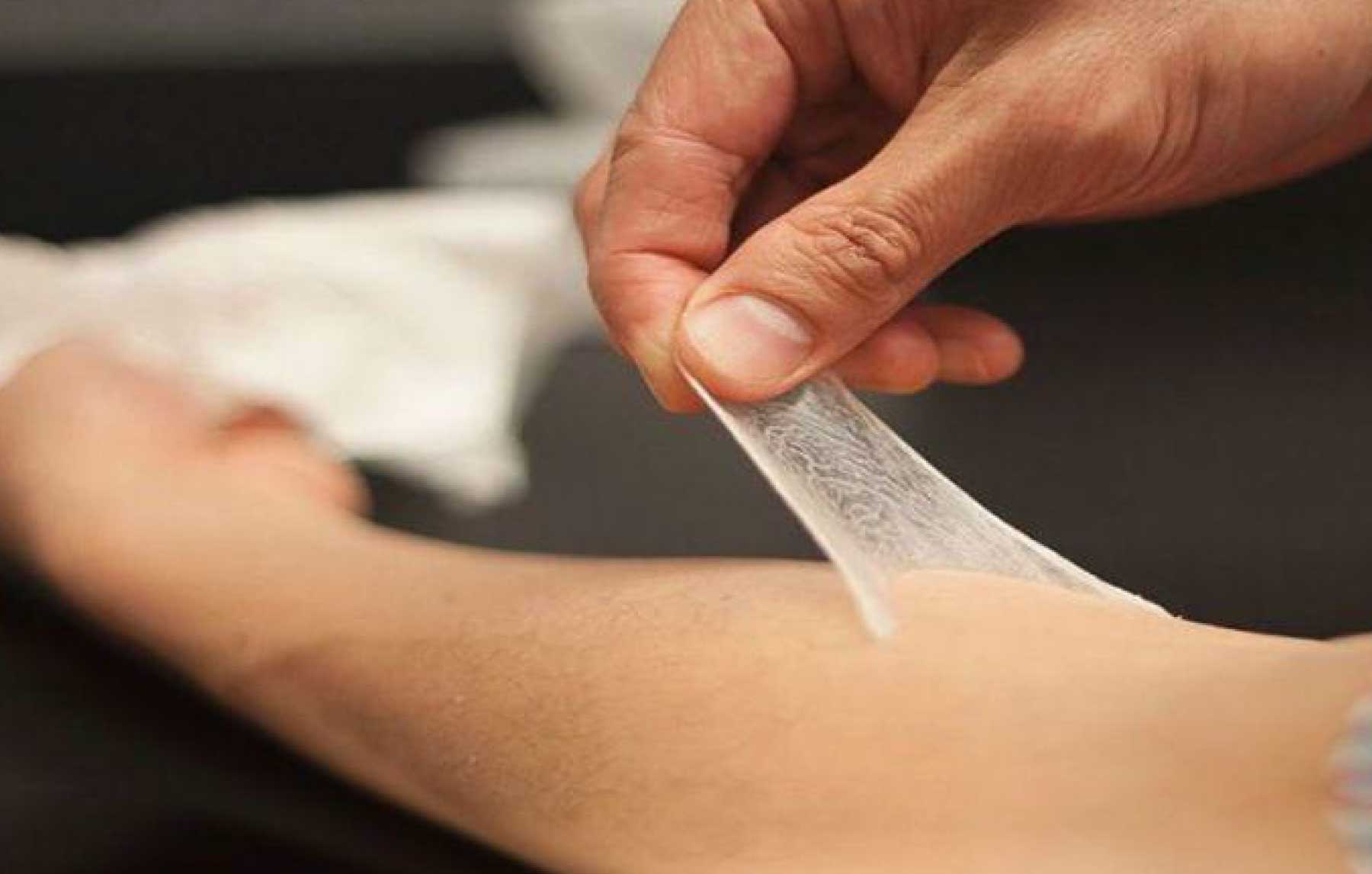
Skin Grafting
Skin grafting is a surgical operation that involves removing skin from one part of the body and rebuilding it to another part of the body or transplanting it. If a section of your body has lost its protective skin covering due to burns, accident, or sickness, this operation may be performed.
Classification
Grafts are categorized according to their thickness, source, and purpose. According to the source:
Autologous: This means that the donor skin comes from a separate part of the same person’s body (also known as an autograft).
Isogeneic: means that the donor and recipient are genetically identical (e.g., monozygotic twins, animals of a single inbred strain; isograft or syngraft).
Allogeneic: means that both the donor and the recipient are of the same species (human, dog, allograft).
Xenogeneic: means that the donor and the recipient are from different species (e.g., bovine cartilage; pigskin; xenograft or heterograft).
Prosthetic: Synthetic materials such as metal, plastic, or ceramic are used to replace missing tissue (prosthetic implants).
Temporary skin substitutes, such as allografts, xenografts, and prosthetic grafts, are typically employed as a wound dressing to avoid infection and fluid loss. As the body begins to reject them, they will eventually need to be removed. Autologous grafts, as well as some types of treated allografts, can be left on indefinitely without causing rejection. Tilapia skin is utilized as a cheap experimental xenograft in regions where porcine skin is unavailable and in veterinary medicine, and genetically modified pigs can produce allograft-equivalent skin material.
In order of thickness:
Split-thickness
A skin graft that includes the epidermis and a portion of the dermis is known as a split-thickness skin graft (STSG). Its thickness is determined by the donor site and the needs of the recipient. A skin meshes can be used to create perforations in the graft, allowing it to extend up to nine times its original size. Split-thickness grafts are popular because they can cover a vast region and have a low rate of auto rejection. After six weeks, the same spot can be harvested again. The donor site requires dressings as it heals via re-epithelialization from the dermis and surrounding skin.
Full-thickness
The epidermis and thickness of the dermis make up a full-thickness skin graft. A split-thickness skin graft is used to cover the donor site, which is either sutured closed or covered by a split-thickness skin transplant.
Graft made of composite materials
A composite transplant is a tiny transplant that has skin, cartilage, or other tissue under it. Ear skin and cartilage, for example, can be used to repair abnormalities in the nasal alar rim.
Risks
The following are some of the risks associated with skin graft surgery:
- Bleeding
- Infection
- Damage to the nerves
- Graft-versus-host disease (GVHD) is a type of graft-versus.
The procedure of skin graft
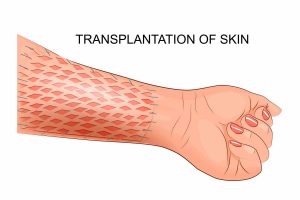
The procedure will begin with the removal of skin from the donor site. The surgeon will gently lay the skin from the donor site over the transplant location and attach it with a surgical dressing, staples, or sutures once it has been taken from the donor site. This permits fluid to escape from behind the skin graft as well.
A buildup of fluid under the graft could lead it to fail. The meshing may give the skin transplant a “fish-net” appearance in the long run.
The doctor also applies a dressing on the donor area that will cover the wound without adhering to it.
A skin graft’s aftercare
Following your surgery, the hospital staff will keep a close eye on you, monitoring your vital signs and administering pain medications.
If you have a split-thickness graft, your doctor may recommend that you better stay in the hospital to ensure that the graft and donor site heal properly.
Within 36 hours, the graft should begin to produce blood vessels and attach to the surrounding skin. It may be a sign in which your body is rejecting the graft if these blood vessels don’t grow soon after surgery.
It’s possible that your doctor will tell you that the transplant “hasn’t taken.” Infection, fluid or blood pooling under the graft, or too much movement of the graft on the wound are all possible causes. If the first graft fails, you may need further surgery and a fresh transplant.
Your doctor will give you medications when you leave the hospital to help you cope with the discomfort. They’ll also show you how to keep the graft and donor sites clean, so they don’t get infections.
The donor site should recover in one to two weeks, while the graft site will take a little longer. You should avoid doing anything that could stretch or damage the graft site for at least three to four weeks after the procedure. When it’s safe to resume routine activities, your doctor will let you know.



Comments 1