Is Diabetic Foot a Treatable Condition?
Diabetic foot infections are a common clinical concern among diabetics. About half of diabetic foot infection patients who have their feet amputated die within five years. Most patients can cure their condition if they are treated properly, however, due to ineffective diagnostic and treatment procedures, many patients are forced to have their limbs amputated.

What is the significance of foot care?
Nerve damage, circulation issues, and infections can all lead to serious foot problems if you have diabetes. You can, however, take care to keep your feet healthy.
Keeping your feet healthy requires managing your diabetes and living a healthy lifestyle. This should include the following:
- Routine medical checkups, including foot checks and ABC tests at every visit (A1c, blood pressure, and cholesterol)
- Check your blood sugar levels
- Regular physical activity
- Consuming a well-balanced, fruit-and-vegetable-rich diet
- Following a healthy foot care program might help you avoid significant foot problems
Diabetic Foot Care Tips
Take care of Your foot by following tips:
Take good care of yourself and your diabetic condition. Regarding nutrition, exercise, and medicine, follow your doctor’s advice. Maintain a sugar level that is within your doctor’s suggested range.
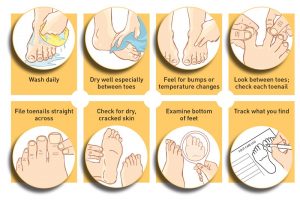
Every day, wash your feet in warm water with a gentle soap. Because nerve injury might compromise sensation in your hands, test the temperature of the water with your elbow. Do not immerse your feet in the water. Make sure your feet are completely dry.
Every day, look for sores, blisters, redness, calluses, or any other concerns on your feet. It’s especially crucial to check your feet on a daily basis if you have poor blood flow.
If your feet’ skin is dry, keep them moist by applying lotion after you’ve washed and dried them. Applying lotion between your toes is not a good idea. Your doctor can advise you on the best sort of lotion to use.
Using an emery board or pumice stone, gently smooth corns, and calluses. When your skin is soft, do this after a bath or shower. You can only move the emery board in one direction.
Toes nails and other care
Once a week, examine your toenails. Trim your toenails straight, nail clipper. Toenail corners should not be rounded off, and sides should not be trimmed down. After clipping, use a nail file to smooth the toenails.
Wear closed shoes or slippers at all times. Even around the house, avoid wearing sandals and walking barefoot.
You have to Wear Socks or stockings. Wear soft elastic socks or stockings that suit your feet properly.
Wear comfortable shoes. Purchase canvas or leather shoes and break them in gradually. Extra-wide shoes, which allow for extra room for the foot if you have a foot deformity, are also available in specialty retailers.
Protect your feet from both excessive hot and cold. When going to the beach or walking on scorching pavement, wear shoes.
Maintain blood flow to your feet. When sitting, raise your feet, wriggle your toes and move your ankles numerous times a day, and avoid crossing your legs for a long time.
Stop smoking if you do. Smoking can exacerbate blood flow issues.
Contact your physician if you have a foot ailment that isn’t improving or won’t heal.
Ensure that your diabetic doctor examines your feet at each visit. Once a year, have your feet thoroughly examined.
Even if you don’t have any foot problems, see your podiatrist (foot doctor) every 2 to 3 months for a checkup.
Symptoms and signs of foot problems
Early warning indications of foot disorders should be recognized, such as:
- The foot that is burning, tingling, or uncomfortable
- Loss of heat, cold, or touch sensations
- Alterations in your feet’s color or form
- Hair loss in the toes, foot, and lower legs
- The toenails are thickening and fading
- Ingrown toenails, blisters, sores, ulcers, infected corns, or red spots
- Skin color changes
- Temperature changes on the skin
- Inflammation of the foot or ankle
- Leg discomfort
- Open sores on the feet that take a long time to heal or drain
- Fungus-infected toenails or ingrown toenails
- Calluses or corns
- Dry skin cracks, particularly around the heel
- Foot odor that persists or is peculiar