

What do you know about Tonsillitis?
It is an inflammation of the tonsils, which are two oval-shaped tissue pads at the back of the throat, one on each side. Swollen tonsils, a sore throat, difficulty in swallowing, and tender lymph nodes on the sides of the neck are all signs and symptoms of tonsillitis.

Types of Tonsillitis
There are three different types:
Acute tonsillitis: It is a condition in which the tonsils become inflamed. These symptoms last 3 to 4 days on average, but they can linger for up to 2 weeks.
Recurrent Tonsillitis: This is when you have tonsillitis on a regular basis throughout the year.
Chronic Tonsillitis: Tonsillitis has been present for a long time. This is when your tonsils have been infected for a long time.
Causes of Tonsillitis
Tonsillitis is most commonly caused by viruses, but it can also be caused by bacterial infections.
Strep throat is caused by a bacterium that is Streptococcus pyogenes (group A streptococcus), which is the most prevalent cause of tonsillitis. Tonsillitis can also be caused by different strep strains and bacteria.
Symptoms of Tonsillitis
The following signs and symptoms characterize tonsillitis:
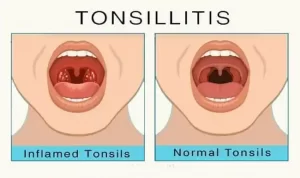
- Red and swollen tonsils
- White or yellow coating or spots on tonsils
- Throat irritation
- Swallowing is difficult or uncomfortable
- Fever
- Lymph nodes (enlarged, painful glands) in the neck
- A voice that is scratchy, muffled, or throaty.
- Breathing problems
- Stomach pain
- Neck ache or stiffness
- Headache
 Diagnosis of Tonsillitis
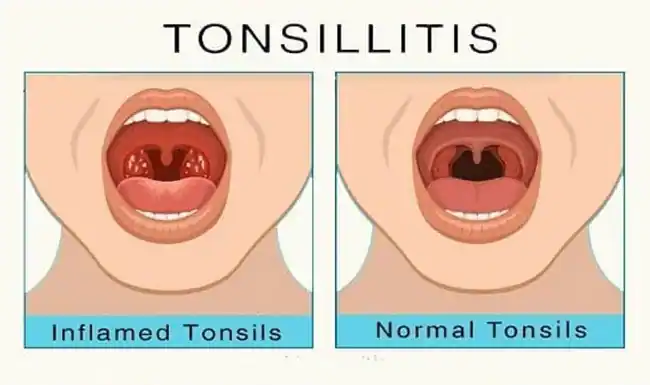
A physical examination is done by a physician. They’ll examine your tonsils to see if they’re red, swollen, or filled with pus. They’ll also see if you have a temperature. They may check for symptoms of infection in your ears and nose, as well as feel for swelling and soreness on the sides of your neck.
It’s possible that tests will be required to determine the reason for your tonsillitis. They are as follows:
A swab of the throat. Your doctor will check your saliva and throat cells for strep bacteria. They’ll clean the back of your throat using a cotton swab. This may be unpleasant, but it will not harm you. In most cases, results are available in 10 to 15 minutes. Your doctor may also request a lab test that could take a few days. If these tests come out negative, your tonsillitis was caused by a virus.
A blood test is required. This is known as a complete blood cell count by your doctor (CBC). It searches for high and low quantities of blood cells to determine whether your tonsillitis was caused by a virus or bacterium.
Scarlatina, a rash associated with a strep throat infection, will be checked by your doctor.
Treatments for Tonsillitis
Your treatment will be influenced by the source of your condition.
Medication
Antibiotics will be prescribed if bacteria is discovered during your tests. The drug will be given to you as a one-time injection or as a pill to take over many days by your doctor. Within two or three days, you’ll begin to feel better, but it’s critical that you take all of your medications.
Remedy at home
Antibiotics won’t assist if you have a virus, and your body will battle the infection on its own. try the following home remedies:
- Get plenty of sleep
- To relieve throat pain, drink warm or very cold liquids
- Smooth meals such as flavored gelatin, ice cream, and applesauce should be consumed
- In your room, use a cool-mist vaporizer or humidifier
- Gargle with a warm saltwater solution
- To numb your throat, eat lozenges containing benzocaine or other drugs.
- Take acetaminophen or ibuprofen, which are both over-the-counter pain medicines.
Prevention
Tonsillitis germs, both viral and bacterial, are infectious. As a result, the greatest form of preventive is to maintain adequate hygiene. Teach your youngster to do the following:
- After and before eating, he or she should wash his or her hands thoroughly and regularly.
- Food, drinking glasses, water bottles, and utensils should not be shared.
- After being diagnosed with tonsillitis, he or she should replace his or her toothbrush.
To help your kid avoid spreading a bacterial or viral infection to others, follow these steps:
- Inquire with your doctor when it is safe for your youngster to return to school.
- Teach your youngster to cough or sneeze into a tissue or, if necessary, his elbow.
- After sneezing or coughing, teach your youngster to wash his or her hands.
Tonsillectomy Surgery
Your doctor will strive to keep your tonsils because they are an important element of your immune system. However, if your tonsillitis persists or won’t go away, or if swollen tonsils make it difficult to breathe or eat, your tonsils may need to be removed. Tonsillectomy is the name for this procedure.
Tonsillectomy was once a common procedure. However, doctors now only recommend treatment if tonsillitis recurs. That means you or your child has had tonsillitis at least seven times in a year, 4 or 5 times in the previous two years, or three times in the previous three years.
Your doctor will usually remove your tonsils with a scalpel, which is a sharp tool. Other techniques for removing swollen tonsils include lasers, radio waves, ultrasonic energy, or electrocautery.





Comments 1